When a customer walks into a physical store, they can pick up a product, feel its weight, read the label and ask a question. Online, none of that is possible. The only thing standing between a browser and a buyer is what they can see on their screen.
That is why product photography is not a nice-to-have in e-commerce. It is one of the most powerful conversion tools available to any online store. The right images do not just show a product — they tell a story, build trust and guide the customer towards a confident buying decision.
In this blog we break down exactly how to use product photography to drive more sales — from the first image a customer sees to the final detail that removes the last trace of doubt.
"In e-commerce, your product photos are your sales team. They cannot speak — but they need to convince, reassure and close the sale entirely on their own."
Why Product Photography Directly Impacts Your Conversion Rate
Before we get into the specifics, it is worth understanding the direct relationship between image quality and sales performance.
Studies consistently show that the quality of product images is one of the top factors influencing online purchase decisions — ranking higher than product descriptions, reviews and even price in many categories. Customers cannot touch or try your product before buying. High-quality images are the closest thing to a physical experience they can get.
Poor product photography communicates more than just a bad image. It communicates a lack of professionalism, a lack of care and a lack of confidence in the product itself. If you are not willing to invest in showing your product well, why should a customer trust that the product itself is worth their money?
On the other hand, professional, well-structured product photography builds immediate trust. It signals quality before the customer has read a single word of your product description.
The First Image — Your Most Important Sales Asset
Every product listing has one image that appears in search results, category pages and social media feeds before a customer ever clicks through. This is your hero image — and it is your single most important sales asset.
The hero image has one job: to stop the scroll and make the customer want to see more.
Here is what a strong hero image looks like:
Clean background. A white or neutral background keeps the focus entirely on the product. It also meets the requirements of most major marketplaces including Amazon, Google Shopping and Bol.com. Clutter in the background pulls attention away from what you are selling.
Full product visibility. The product should fill the frame confidently — not too small and not cropped. The customer needs to see exactly what they are buying at a glance.
Accurate colour representation. Colour discrepancies between the product photo and the actual product are one of the leading causes of returns. Your hero image must represent the true colour of your product accurately.
High resolution. Customers zoom in. Your hero image needs to hold up at full zoom without becoming blurry or pixelated. A minimum of 1500 x 1500 pixels is recommended for most platforms.
Consistent branding. If you sell multiple products, your hero images should have a consistent visual style — same background, same lighting, same framing. This creates a professional, cohesive storefront that builds brand recognition.
Your hero image is not the place for creativity. It is the place for clarity, professionalism and precision.
The Supporting Images — Building the Customer Journey
Once a customer clicks through to your product page, the remaining images have a different and equally important job: to guide the customer through a complete visual journey that answers every question, removes every doubt and builds the confidence needed to complete the purchase.
Think of your supporting images as a structured story — each one adding a new layer of information and reassurance.
Lifestyle Images — Show the Product in Context
Lifestyle images show your product being used in a real-world setting. They help the customer visualise the product in their own life — which is one of the most powerful triggers for a buying decision.
A lifestyle image of a coffee machine on a clean kitchen counter, a pair of trainers on a morning run or a desk lamp illuminating a home office creates an emotional connection that a plain white background image never can. It answers the unspoken question every customer asks: “Can I picture this in my life?”
Detail Images — Highlight the USPs
Every product has unique selling points — the features, materials or qualities that make it worth buying. Detail images are how you communicate those USPs visually, without relying entirely on text.
Close-up shots of stitching quality, material texture, product dimensions, packaging details or special features give the customer the tactile information they are missing by shopping online. They signal that you are proud of your product and have nothing to hide.
For each key USP of your product, ask yourself: can I show this rather than just describe it? In almost every case, the answer is yes — and a visual demonstration is always more convincing than a written claim.
Scale Images — Remove Uncertainty
One of the most common reasons customers hesitate to buy online is uncertainty about size. A product that looks large in photos but arrives disappointingly small is a fast route to a negative review and a return request.
Scale images — showing the product next to a familiar object or being held by a person — instantly communicate real-world dimensions in a way that written measurements rarely achieve. This simple addition to your image set removes a significant barrier to purchase.
Infographic Images — Communicate Key Information Visually
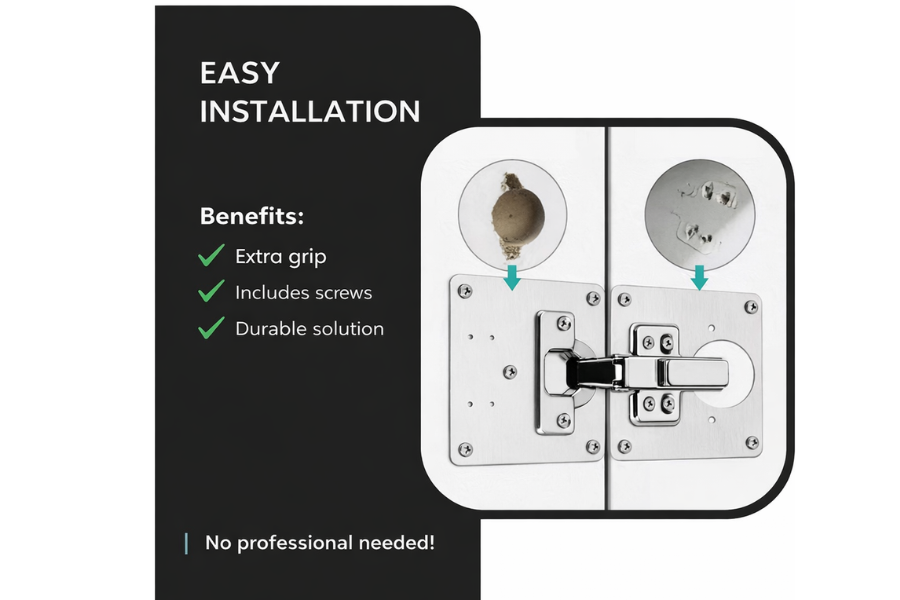
Infographic-style images combine visuals with short, clear text to highlight the most important features and benefits of your product. They are particularly effective for products with multiple features or technical specifications.
A well-designed infographic image might highlight the five key features of a product with short labels pointing to each one — material composition, dimensions, certifications, compatibility or warranty. This type of image is highly shareable on social media and performs exceptionally well in ad campaigns.
Branding — The Element Most Online Stores Overlook
Product photography is also an opportunity to build your brand — and most online stores completely miss it.
Consistent visual branding across your entire product catalogue communicates professionalism, builds recognition and creates a shopping experience that feels cohesive and trustworthy. Customers who recognise your visual style across your website, your product pages and your social media channels develop a familiarity with your brand that makes them more likely to return.
Here is what consistent product photography branding looks like in practice:
A defined colour palette. If your brand uses specific colours, those colours should be present in your lifestyle and infographic images — in props, backgrounds or design elements.
A consistent visual tone. Decide whether your brand feels clean and minimal, warm and natural, bold and energetic or premium and refined — and make sure every image reflects that tone.
Consistent typography in infographic images. If you use text overlays in your product images, use the same fonts and colours across every product. This small detail makes a significant difference to the overall professionalism of your store.
Watermarks or subtle logo placement. Adding a small, tasteful logo to your product images protects your content and reinforces brand recognition when images are shared or appear in search results.
SEO and Product Photography — The Connection Most Sellers Miss
Great product photography does not just convert visitors — it also helps you get found in the first place. Here is how image SEO works and why it matters for your online store.
File names matter. Before uploading any product image, rename the file descriptively. Instead of IMG_4823.jpg, use something like black-leather-wallet-men-slim.jpg. Google reads file names and uses them to understand what your image shows.
Alt text is essential. Every product image on your website should have an alt text — a short written description of the image. Alt text helps Google index your images correctly and improves your overall page SEO. It also makes your store accessible to visually impaired users, which is increasingly important.
Image file size affects page speed. Large, uncompressed image files slow down your product pages — and page speed is a direct Google ranking factor. Always compress your images before uploading without sacrificing visible quality. Tools like TinyPNG or Squoosh make this process quick and free.
Google Image Search is a traffic source. Well-optimised product images appear in Google Image Search results — bringing additional organic traffic to your product pages from customers who are actively searching for what you sell.
AI Product Visuals — Professional Quality Without the Photoshoot Cost
Professional product photography has traditionally required a studio, a photographer and a significant budget. For small and growing e-commerce businesses, that investment is not always realistic — especially when launching new products regularly.
AI-enhanced product visuals have changed that equation entirely. Using your existing product images as a starting point, AI tools can generate professional-quality lifestyle backgrounds, clean studio shots and branded visuals at a fraction of the cost of a traditional photoshoot.
The results are increasingly indistinguishable from professionally photographed images — and they can be produced in hours rather than days. For businesses that need to scale their product catalogue quickly or test new visual styles without a large upfront investment, AI product visuals are a genuinely powerful option.
The Bottom Line
In e-commerce, your product photography is your most powerful sales tool. It is the first thing a customer sees, the primary factor in their buying decision and the clearest signal of your brand’s quality and professionalism.
Invest in a strong hero image that stops the scroll. Build a supporting image set that guides the customer through a complete visual journey. Use lifestyle, detail, scale and infographic images to answer every question and remove every doubt. Apply consistent branding across your entire catalogue. And optimise every image for search so that your products get found as well as purchased.
Done right, great product photography does not just make your store look better. It makes it sell better — consistently, predictably and at scale.
Want professional product visuals that convert browsers into buyers — without the cost of a traditional photoshoot? We create AI-enhanced product images and branded visuals that make your products stand out across your store, your ads and your social media. You don’t have to commit to a monthly budget right away. We start with a solid foundation and build from there.
Get in touch today and let’s talk about what’s possible for your store.